You know the feeling when you look at a fish tank and just know something is off? We see it frequently with new clients who are trying to balance a busy schedule with a healthy ecosystem.
Finding that sweet spot between neglect and over-cleaning is the hardest part of the hobby.
Our team has managed hundreds of freshwater fish systems, and we have learned that stability always trumps perfection.
The goal isn’t to scrub the tank sterile. It is to manage an ecosystem that largely takes care of itself.
The Golden Rule: Consistency Over Intensity
Most people think a massive monthly deep clean is better than small weekly tweaks. The data tells a different story.
We find that fish stress levels spike significantly during large water parameter shifts. A consistent 20-25% water change every week creates a stable baseline that prevents “Old Tank Syndrome,” a condition where pH crashes and nitrate levels become toxic.
Think of maintenance as preventive care rather than damage control.
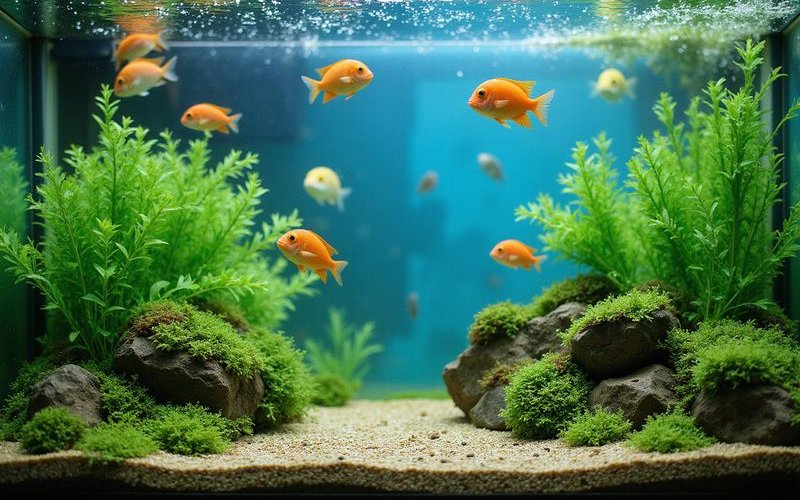
Weekly Tasks (15-30 Minutes)
These tasks should become as routine as checking your email. Efficiency is key here.
Water Changes (The Right Way)
This step is the single most effective way to keep fish healthy. Water changes remove nitrates and replenish essential minerals like calcium and magnesium.
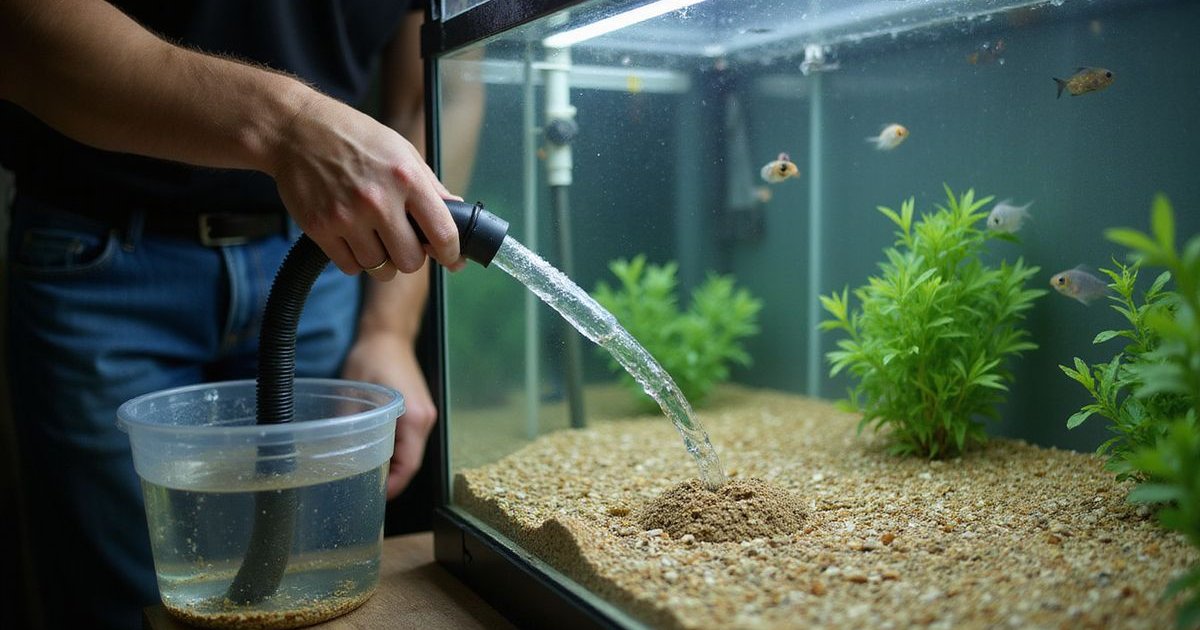
We recommend using a siphon system like the Python No Spill Clean and Fill for tanks larger than 20 gallons. It connects directly to your sink, eliminating the back-breaking work of carrying buckets.
Follow this workflow:
- Turn off heaters and filters. This prevents equipment burnout when the water level drops.
- Vacuum the substrate. Push the gravel vac into the sand or gravel to pull out trapped waste.
- Clean the decor. Remove any rocks or wood with visible algae.
- Condition the new water. Add a dechlorinator like Seachem Prime to neutralize chlorine and chloramines immediately.
- Match the temperature. Use a digital thermometer to ensure the new water is within 2 degrees of the tank water.
Pro Tip: Dedicate a specific bucket for your aquarium if you don’t use a hose system. Soap residue from household chores is lethal to fish.
Visual Inspection
Scan the tank while the water siphons. Look for these specific warning signs:
- Flashing: Are fish rubbing their sides against rocks? This often indicates parasites or poor water quality.
- Clamped Fins: Fins held tight against the body usually signal stress or illness.
- Equipment Check: Is the heater light on? Is the filter flow strong?
Glass Cleaning
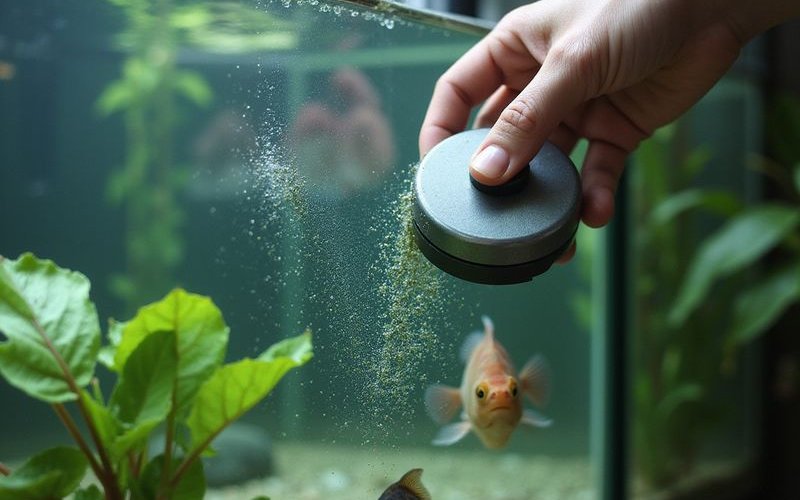
Algae films block your view and ruin the aesthetic. We prefer using magnetic cleaners like the Mag-Float or Flipper.
They allow you to scrub the inside of the glass without getting your arms wet.
Monthly Tasks (30-60 Minutes)
These tasks dig a little deeper to keep the life-support systems running.
Filter Maintenance
Your filter is the engine of the aquarium. A clogged filter restricts oxygen exchange and stresses the fish.
Cleaning it requires a specific technique to protect your beneficial bacteria:
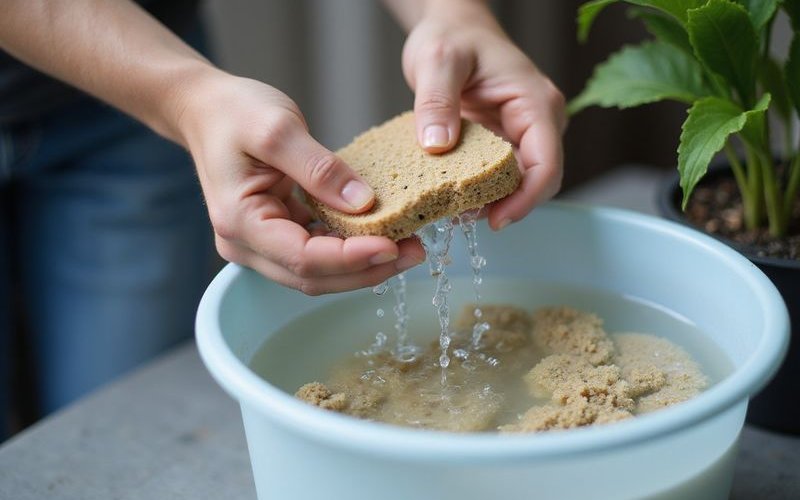
- Rinse mechanical media. Squeeze out sponges and filter pads in a bucket of old tank water, never tap water.
- Protect the biology. Chlorine in tap water kills the beneficial bacteria that process waste.
- Inspect the impeller. Remove the magnetic fan assembly and wipe off any slime or grit.
- Check chemical media. Carbon usually expires after 3-4 weeks, so replace it now if you use it.
Water Testing: Accuracy Matters
You cannot manage what you do not measure. We see many hobbyists rely on 5-in-1 test strips, but they can be notoriously inaccurate due to humidity exposure.
For reliable results, we use liquid reagent kits like the API Freshwater Master Test Kit.
| Feature | Test Strips | Liquid Reagent Kits |
|---|---|---|
| Accuracy | Low to Moderate | High |
| Cost Per Test | High ($0.50 - $1.00) | Low ($0.05 - $0.10) |
| Shelf Life | Short (sensitive to moisture) | Long (3-5 years) |
| Best For | Quick daily checks | Monthly analysis |
Your target parameters should be:
- Ammonia: 0 ppm (Anything higher is toxic)
- Nitrite: 0 ppm
- Nitrate: Below 40 ppm (Below 20 ppm is ideal for sensitive fish)
We offer free water testing at the shop if you are unsure about your results.
Plant Care
Live plants are excellent natural filters, but they need maintenance too.
- Trim stems that are shading lower leaves.
- Remove melting or yellowing leaves immediately so they don’t rot and spike ammonia.
- Check for pest snails on the undersides of leaves.
Quarterly Tasks (Every 3 Months)
Every season, you should inspect the hardware and do a deep clean.
Deep Clean Decorations
Algae can eventually bond to rocks and plastic plants. Remove them and scrub with a firm brush.
If scrubbing isn’t enough, you can soak hardscape items in a solution of hydrogen peroxide and water. Rinse them thoroughly in fresh water with a double dose of dechlorinator before putting them back.
Lighting Maintenance
Mineral deposits and dust on your light fixture can reduce output by up to 30%. This loss of light, known as PAR reduction, can starve your live plants.
Unplug the fixture and wipe down the splash guard or lens with a vinegar-soaked cloth to remove hard water stains.
Seasonal Considerations
Weather changes impact indoor tanks more than most people realize.
Summer Challenges
Our summers in the US, especially here in the South, bring heat issues.
- Oxygen Depletion: Warmer water holds less oxygen. If the tank hits 82°F, add an air stone.
- Evaporation: Top off frequently with distilled or RO water to prevent mineral creep (GH/KH spikes).
- AC Impact: If your home AC fails, float bags of ice in the tank to keep temps down in an emergency.
Winter Watch
Heaters are the most common equipment point of failure.
- Wattage Check: Ensure you have 3-5 watts of heating power per gallon of water.
- Redundancy: We recommend using an external temperature controller like an Inkbird. It cuts power to the heater if it malfunctions and gets too hot.
Signs You Need to Clean More Often
Your tank will tell you when the schedule isn’t enough.
- Cloudy Water: Bacterial blooms that don’t clear up in 24 hours.
- High Nitrates: If nitrates climb back to 40ppm just three days after a water change, your bioload is too high.
- Surface Gasping: Fish hanging at the top usually means low oxygen or high ammonia.
Signs You Are Cleaning Too Much
Yes, aggressive cleaning can crash your cycle.
- Mini-Cycles: Seeing trace ammonia after a cleaning day means you killed too much bacteria.
- Persistent Cloudiness: Milky water often signals a bacterial bloom trying to re-establish itself.
- Skittish Fish: If fish hide for days after maintenance, your process is too invasive.
The 5-Minute Daily Check
You don’t need to get your hands wet every day. Just observe.
- Head Count: Are all residents accounted for?
- Behavior Check: Is everyone swimming actively?
- Flow Check: Is the water surface agitating?
- Feeding: Provide only what they can eat in two minutes.
- Enjoyment: Take a moment to actually look at your creation.
Make It Routine
The best maintenance plan is the one you actually stick to. We recommend picking a low-stress time, like Saturday morning coffee or Sunday evening.
Consistency protects your investment and keeps your living art looking its best.
Need help troubleshooting a persistent issue or want a professional opinion? Stop by Gulf Coast Aquatics anytime. We are here to help you keep your aquarium thriving.
Tags
Gulf Coast Aquatics
Your local aquarium experts in Sarasota. We're real fishkeepers sharing what we've learned from years of experience keeping freshwater and saltwater tanks.