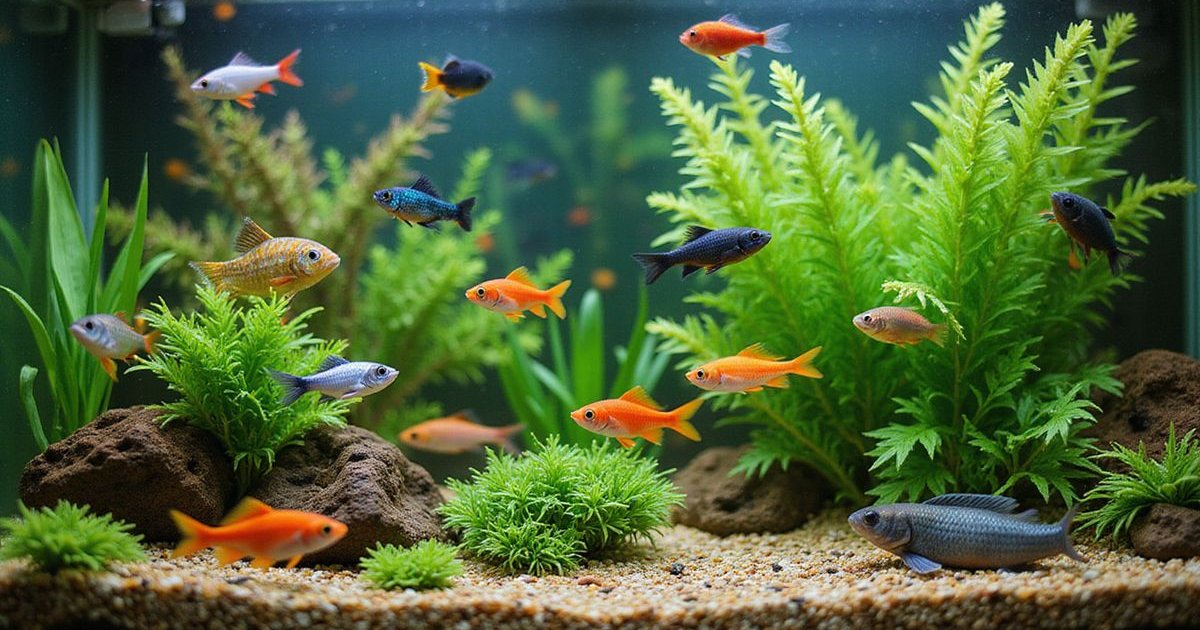
Selecting the right livestock is the single most important decision for a new aquarium owner. While thousands of species are available in the trade, only a small percentage are truly suitable for a new system. Most beginners fail not because they lack effort, but because they unknowingly choose fish that require expert-level water stability.
We have spent years helping clients recover from these exact stocking errors.
The best beginner fish are defined by their ability to withstand the “new tank syndrome”—the inevitable fluctuations in water chemistry that occur during the first few months. You need species that are biologically hardy, active, and peaceful enough to coexist in a community setting.
Below, we detail our top 10 recommendations based on hardiness, temperament, and long-term viability in home aquariums.
What Makes a Fish “Beginner-Friendly”?
A “beginner” label does not mean a fish is boring. It simply means the species has a wider margin for error regarding water parameters.
The ideal starter fish possesses specific biological traits:
- Broad Chemical Tolerance: They can handle pH shifts between 6.5 and 7.5 without stress.
- Dietary Flexibility: These species readily accept processed flake or pellet foods.
- Social Stability: They do not display aggression that requires complex tank management.
- Disease Resistance: They are less prone to common ailments like Ich or fin rot.
Let’s examine the specific species that meet these high standards.
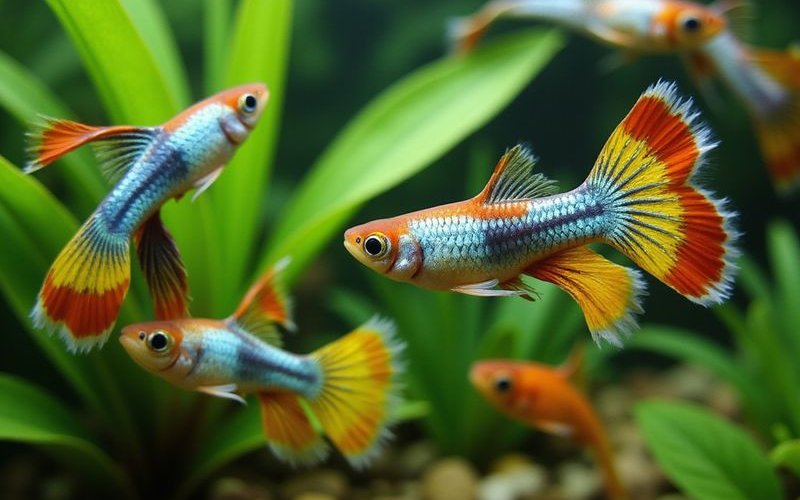
1. Guppies (Poecilia reticulata)
The classic beginner fish for good reason. Guppies remain the gold standard for new tanks because they offer the color of a saltwater reef fish with the hardiness of a pond fish. Males display stunning caudal fin patterns in neon blues, oranges, and metallic greens.
Females are generally larger, silver-bodied, and less colorful, but they play a vital role in the social hierarchy.
Quick Stats for Success:
- Tank size: 10+ gallons
- Temperature: 72-82°F
- Average Price: $3-$6 per fish
- Lifespan: 2-3 years
Pro Tip: We always advise purchasing a ratio of two females for every one male. This dispersion of attention prevents the males from exhausting a single female with constant breeding attempts.
- Note: They breed easily. Unless you have a plan for dozens of fry (babies), consider a “bachelor tank” of only males.
2. Platies (Xiphophorus maculatus)
Colorful and easygoing. Platies are sturdy livebearers that come in distinct color morphs, such as the popular “Mickey Mouse” or “Sunburst” varieties. They are slightly stockier than guppies and are less prone to being bullied by semi-aggressive tank mates.
These fish are naturally curious and will spend their day picking at algae and exploring every level of the aquarium.
Quick Stats for Success:
- Tank size: 10+ gallons
- Temperature: 70-80°F
- Diet: Omnivorous (spirulina flakes are excellent for their color)
Key Benefit: Platies thrive in harder water with a higher pH (7.0-8.0), which is common in many US tap water systems.
- Note: Like guppies, they’re livebearers that breed readily.
3. Zebra Danios (Danio rerio)
Virtually indestructible. Zebra danios are arguably the hardiest tropical fish in the hobby. They act as excellent “dither fish,” meaning their bold, active swimming behavior signals to shy fish that the environment is safe.
You will rarely see them sitting still; they constantly zip across the top third of the tank.
Quick Stats for Success:
- Tank size: 10+ gallons (Long tanks are preferred for swimming space)
- Temperature: 64-77°F
- Social Need: Schooling (Must be kept in groups)
Warning: We often see these sold as singles, but this causes stress. A lone Danio may become fin-nippy toward other fish out of insecurity.
- Note: Keep in groups of 6+ for best behavior.
4. Corydoras Catfish
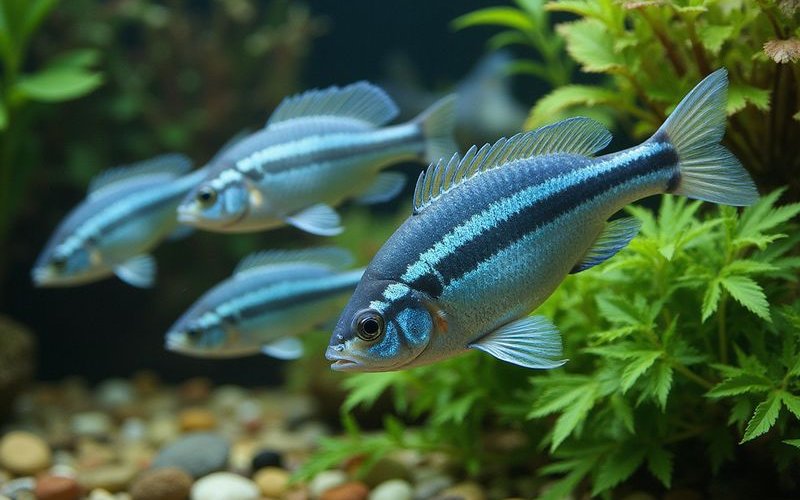
Essential cleanup crew. Affectionately known as “Corys,” these armored catfish are peaceful bottom-dwellers that spend their lives scavenging specifically for leftover food that falls to the substrate. The Bronze (Corydoras aeneus) and Panda (Corydoras panda) varieties are particularly resilient.
They possess a unique charm and often “wink” at their owners—a movement of their eyes that is actually them looking down to scan the gravel.
Quick Stats for Success:
- Tank size: 20+ gallons
- Temperature: 72-79°F
- Substrate Requirement: Sand or fine gravel
Substrate Safety: You must avoid sharp, jagged gravel. Rough substrates will erode their delicate barbels (whiskers), leading to infection and the inability to find food.
- Note: Need smooth substrate to protect their barbels.
5. Cherry Barbs (Puntius titteya)
Peaceful and beautiful. Many new hobbyists hear “barb” and worry about aggression, as the cousin Tiger Barb is notorious for fin-nipping. Cherry Barbs are the exception. They are shy, gentle community fish that bring a deep, ruby-red hue to planted tanks.
Males turn an intense red during spawning displays, while females remain a copper color.
Quick Stats for Success:
- Tank size: 20+ gallons
- Temperature: 73-81°F
- Plant Need: Moderate to heavy cover
The “So What”: This species is perfect for adding red contrast to a tank dominated by green plants and blue/silver fish.
- Note: Keep in groups with more females than males to reduce rivalry stress.
6. White Cloud Mountain Minnows
Tolerates cool water. Often called the “Poor Man’s Neon Tetra,” this species has a fascinating history and was once thought extinct in the wild. White Clouds are ideal for office tanks or homes where consistent heating is difficult to maintain.
They feature neon lateral lines and red tail accents that rival many tropical species in beauty.
Quick Stats for Success:
- Tank size: 10+ gallons
- Temperature: 64-72°F (Room temperature is often perfect)
- Hardiness: Extremely High
Cost Saving: We recommend these for budget-conscious setups because they often eliminate the need for an aquarium heater, reducing both equipment cost and electricity usage.
- Note: One of the few “tropical” fish that prefers cooler water.
7. Neon Tetras (Paracheirodon innesi)
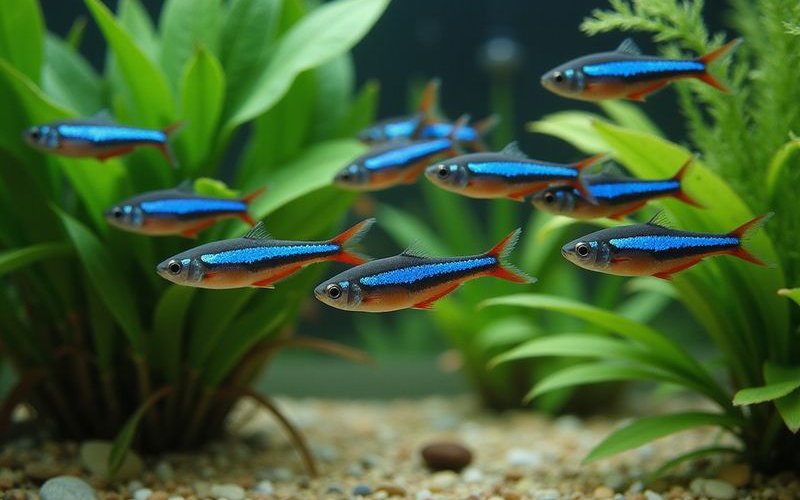
The iconic community fish. Their iridescent blue and red stripes are biologically designed to keep the school together in murky Amazonian waters. In a home aquarium, a school of Neons creates a stunning, glowing display that few other freshwater fish can match.
While listed here, they are the most sensitive option on this list.
Quick Stats for Success:
- Tank size: 15+ gallons
- Temperature: 70-81°F
- Water Stability: Moderate requirement
Critical Advice: We strongly suggest adding Neon Tetras only after your tank has been established for at least 3 months. They do not handle the “cycling” phase well and require a mature biological filter.
- Note: Add only to cycled tanks; keep in groups of 8+ for security.
8. Swordtails (Xiphophorus helleri)
Active and personable. Swordtails are larger livebearers known for the male’s long, sword-like extension on the lower tail fin. They are robust eaters and grow larger than Platies or Guppies, often reaching 4 to 5 inches.
These fish are powerful swimmers and have been known to jump when startled.
Quick Stats for Success:
- Tank size: 20+ gallons
- Temperature: 72-79°F
- Lid Requirement: Mandatory
Gender Ratios: Male Swordtails can be territorial toward one another. In a 20-gallon tank, it is best to keep a single male with two or three females to maintain peace.
- Note: Males can be aggressive to each other; keep one male with multiple females.
9. Bristlenose Plecos (Ancistrus)
Best algae eater for beginners. The “suckerfish” is a staple in the hobby, but the Common Pleco is a massive mistake for beginners as it grows to nearly two feet long. The Bristlenose Pleco is the perfect alternative, maxing out at a manageable 4 to 5 inches.
They work tirelessly to scrub glass and rocks, consuming brown diatoms and green algae.
Quick Stats for Success:
- Tank size: 20+ gallons
- Temperature: 73-81°F
- Dietary Need: Fiber (Driftwood)
Dietary Requirement: You must include natural driftwood in the tank. These fish digest wood fibers to maintain gut health; without it, they will slowly starve even if fed algae wafers.
- Note: Need driftwood for fiber; supplement with algae wafers.
10. Mollies (Poecilia sphenops)
Hardy and versatile. Mollies are unique because they can survive in fresh, brackish, and even full marine water. This biological adaptability makes them incredibly forgiving of mineral hardness and pH fluctuations in a freshwater tank.
Varieties include the solid Black Molly, the spotted Dalmatian, and the Sailfin Molly.
Quick Stats for Success:
- Tank size: 20+ gallons
- Temperature: 72-82°F
- Behavior: Active grazer
Health Indicator: If you see a Molly “shimmying” (shaking in place) or clamping its fins, it is often the first warning sign that your water quality is dropping. They act as excellent biological monitors for the tank.
- Note: Prefer harder water; can handle slight salt.
Building Your Community
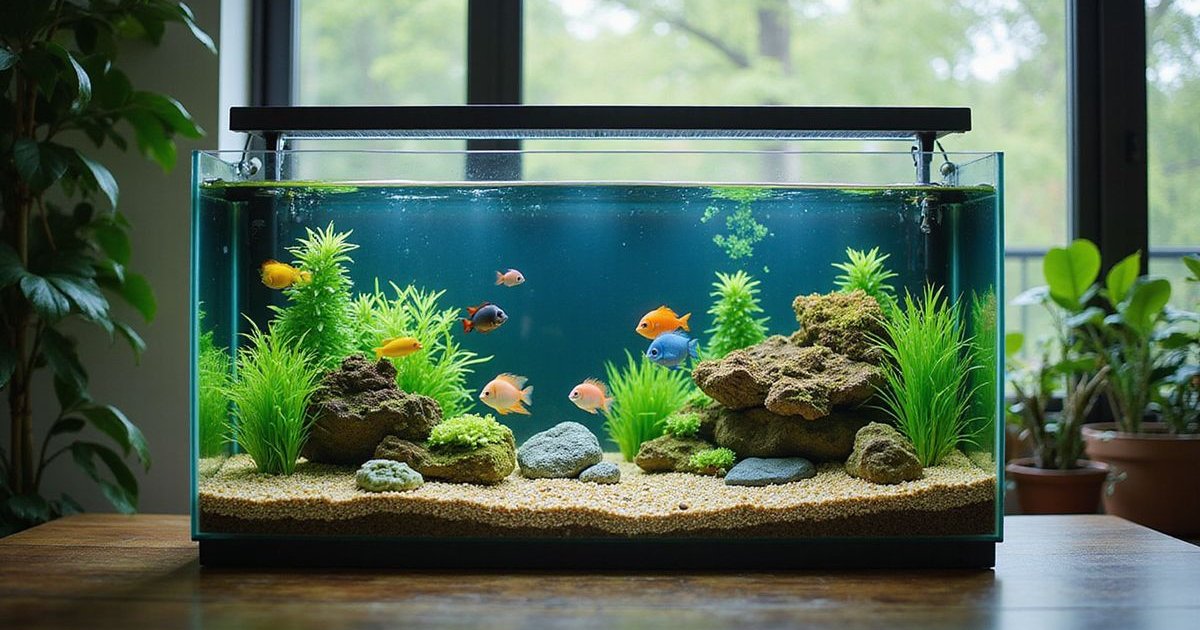
Stocking a tank is about balancing distinct swimming zones. You want activity at the top, color in the middle, and scavenging at the bottom.
We have designed this sample stocking list for a standard 20-gallon “High” tank to ensure minimal conflict:
| Zone | Species | Quantity | Purpose |
|---|---|---|---|
| Top/Middle | Neon Tetras | 6 | Schooling color & movement |
| Middle | Platies | 4 | Bright individual color & activity |
| Bottom | Corydoras Catfish | 4 | Scavenging & movement |
| Surfaces | Bristlenose Pleco | 1 | Algae control |
This configuration gives you activity at all levels of the tank without overcrowding the biological filter.
Fish to Avoid as a Beginner
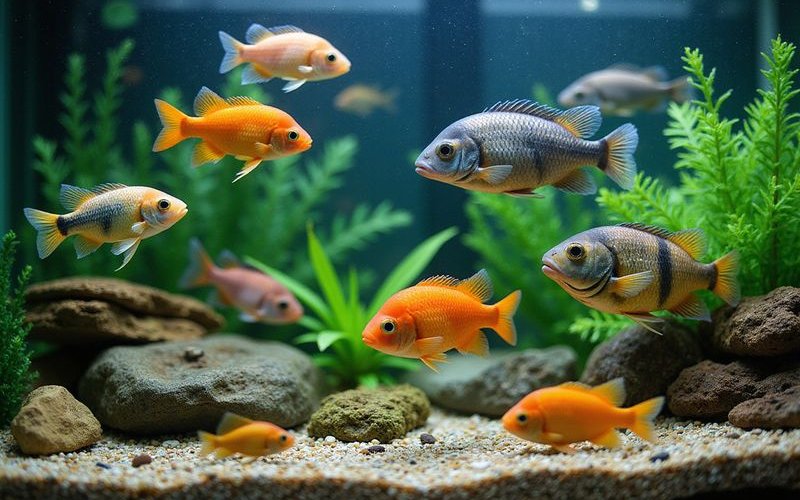
Marketing can be deceptive. Pet stores often sell juveniles of massive species as “community fish” without warning you about their adult size or aggression.
Avoid these specific species until you have more experience:
- Common Plecos: They grow to 18+ inches and produce massive amounts of waste that can crash a small filter.
- Goldfish: These are cold-water carp that require 30+ gallons per fish. They are messy and incompatible with tropical fish.
- Male Bettas in Communities: While possible, it requires specific planning. They often attack colorful fish like Guppies.
- Oscars: These predatory cichlids grow huge, eat smaller tank mates, and rearrange tank decor.
- Pictus Catfish: These are predatory catfish that will eat Neon Tetras and other small schooling fish at night.
Ready to Stock Your Tank?
Selecting the right livestock is the difference between a thriving ecosystem and a stressful maintenance schedule. We always recommend testing your water parameters before bringing your first bag of fish home.
Visit Gulf Coast Aquatics and we’ll help you choose healthy fish that work well together. We quarantine all our fish and can advise on the best combinations for your tank size.
Remember: start with just a few fish and add more gradually. Your patience will be rewarded with healthier, happier fish.
Tags
Gulf Coast Aquatics
Your local aquarium experts in Sarasota. We're real fishkeepers sharing what we've learned from years of experience keeping freshwater and saltwater tanks.